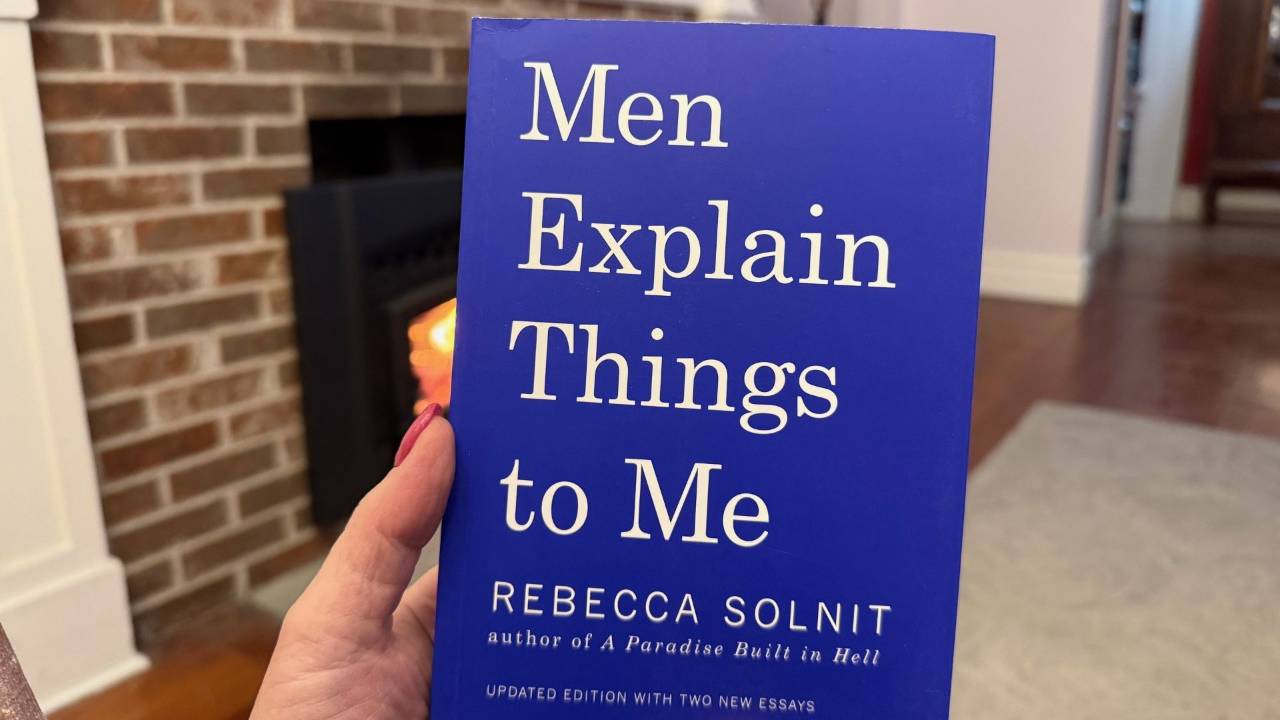
BOOK REVIEW: Men Explain Things to Me by Rebecca Solnit
Dec 17, 2025Why I Read This Book
Rebecca Solnit's 2014 book landed on my reading list after I asked ChatGPT to generate titles that might help me understand my own writing voice while stretching my thinking around gender, communication, and systems of power. The opening passage—where a man confidently “explains” Solnit’s own work back to her—hooked me immediately. It captured something familiar and frustrating, making me want to see where she would take the conversation.
What the Book Is Really About
Beneath the collection of essays lies a clear underlying message: gendered power structures shape how women are heard, believed, dismissed, and controlled. Solnit uses stories, history, and mythology to show that misogyny is not a modern glitch—it’s a long-standing system that continues to evolve and reproduce itself.
While the book appears to be about communication, it’s ultimately about credibility, agency, and the emotional consequences of being routinely underestimated.
How Solnit Builds Her Case
The essays are not linear; they function more like thematic fragments that circle around the same core ideas from different angles.
Her work echoes:
-
Feminist theory: especially epistemic injustice and credibility gaps.
-
Gender studies: how norms shape lived experience and emotional impact.
-
Sociology of power: how systems normalize inequality.
-
Cultural analysis: using myth and media to understand modern gender dynamics.
This gives the book intellectual richness, though sometimes at the cost of cohesion.
Where the Book Works Well
The first essay is by far the strongest. It’s sharp, relatable, and disarmingly honest. It validates a lived reality many women know instinctively—being spoken over, spoken for, or spoken about as if they are absent from the conversation.
The early chapters feel focused, articulate, and intentional. They ground the reader in a familiar emotional landscape and open the door for deeper reflection.
Where the Book Loses Strength
As the book progresses, the essays start circling the same issues from slightly different angles. The repetition doesn’t dilute the theme itself—the underlying message remains consistent—but it does make the overall point feel less certain because new layers of insight don’t always emerge. Instead of building toward a sharper conclusion, the essays feel parallel rather than cumulative.
This may be an intentional stylistic choice, but for readers who prefer a more unified argument or a sense of conceptual momentum, the format can feel somewhat unanchored.
What the Book Teaches Us About Human Behaviour
Through an emotional intelligence lens, Solnit’s essays highlight three striking truths:
-
People often remain unaware of the harm they cause. Especially when the behavior feels normal to them.
-
Cultural norms create blind spots. Gendered expectations shape how we interpret credibility, authority, and worth.
-
Naming the pattern brings relief. Many women find validation simply in seeing their experiences reflected.
While not a leadership book, it offers a mirror for anyone who wants to examine how they show up in conversations and relationships.
How This Book Can Be Applied
Readers—especially those in positions of influence—can use this book to:
-
Notice who they interrupt, dismiss, or “correct” without realizing it.
-
Reflect on the credibility assumptions they make automatically.
-
Recognize misogyny not as individual malice, but as inherited systems that require conscious unlearning.
For me, the book deepened my awareness of how much anti-female behavior we have normalized. Solnit’s historical examples show overwhelmingly that progress has been uneven and fragile.
Who This Book Is For
This is a meaningful read for:
-
Anyone wanting to expand their understanding of gendered power.
-
Men interested in how these dynamics play out in everyday life.
-
Readers who enjoy thoughtful, essay-driven feminist commentary.
Those who prefer structured argumentation, or who resist feminist analysis outright, may find the format challenging.
My Ratings
-
Clarity: 3/5
-
Emotional Depth: 4/5
-
Practical Utility: 2/5
-
Theoretical Rigor: 4/5
-
Overall Impact: 4/5
Final Reflection
One idea lingers: women have never not had to fight for their own power and freedom.
Solnit doesn’t offer solutions, but she offers perspective—reminding us how deeply gender shapes the stories we tell, the voices we trust, and the truths we believe.