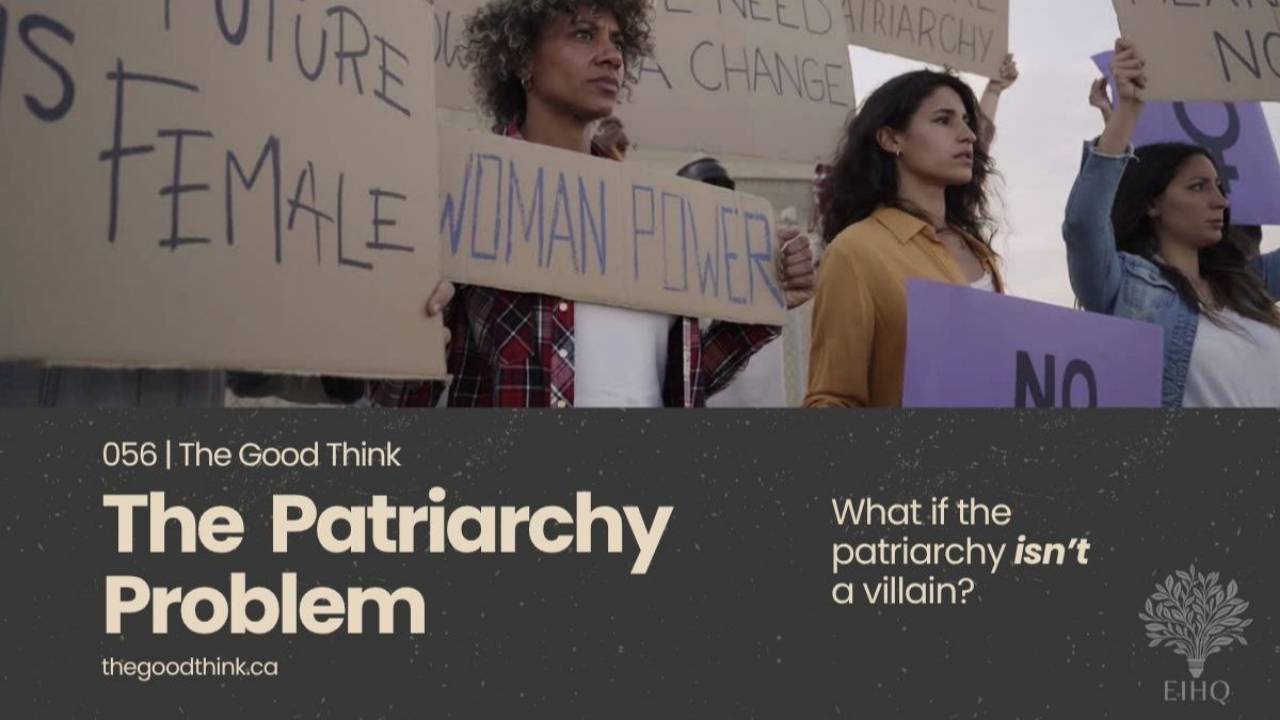
056 | The Patriarchy Problem: Show Notes
Oct 23, 2025Episode 56 | The Good Think
The word patriarchy evokes strong reactions—some rooted in history, others in daily life. But what if the problem isn’t just the system itself, but the confusion around what we even mean by it? In Episode 56 of The Good Think, Dr. Denaige McDonnell unpacks the patriarchy problem—not to argue for or against it, but to understand it in all its nuance.
From its Greek origins to its modern symbolism, from medical systems to household dynamics, this episode explores how patriarchy evolved from an organizing principle into a catch-all explanation for inequality, exhaustion, and structural inertia.
What We’re Really Talking About
Patriarchy is no longer just a word—it’s become a social grenade.
It once meant lineage and structure. Now it’s loaded with emotion, confusion, and cultural fatigue. As Denaige explains, it’s been stretched so far it risks meaning nothing at all. But before we talk about what’s wrong with it, we need to ask: What even is it?
Where Patriarchy Comes From
The term originates from Greek: patria (family) and arkhē (rule or order). Early uses were descriptive—not moral. It referred to systems of authority, tradition, and inheritance. Across cultures, variations of patriarchy (and even matriarchy) existed for practical reasons: survival, order, lineage.
But Western patriarchy, shaped by colonialism, spread globally and took root in systems we still use today.
How the Word Changed
By the 1970s, feminist scholars reframed patriarchy as a system of privilege and exclusion. This wasn’t just about household roles—it was about credit access, workplace rights, and bodily autonomy. Naming it brought long-overdue clarity to structural injustices.
But like many words (trauma, gaslighting, toxic), patriarchy drifted from precision to popularity. It left academia—and lost its borders.
Design Flaws in the System
Much of patriarchy wasn’t designed to exclude—it simply defaulted to what felt efficient at the time. From office temperatures based on male metabolism to medical research built around male bodies, the system worked… until it didn’t.
These weren’t always acts of malice—they were acts of default. But the impact was the same: women, and later men, found themselves inside a system no longer suited to real human needs.
When the System Couldn’t Keep Up
From World War II to modern workplaces, patriarchy kept evolving—but not always well. Women did both paid and unpaid work. Men returned from war traumatized, expected to lead with control but not vulnerability. The system expanded but never fully adapted.
When patriarchy becomes inefficient, Denaige argues, women carry the cost first.
So What Is It Really?
Patriarchy isn’t a villain in a boardroom—it’s the scaffolding beneath many of our institutions and habits. It’s not just “the rule of men”—it’s the rule of an outdated logic: hierarchy over harmony, efficiency over empathy, certainty over curiosity.
To evolve, we don’t have to destroy it—we have to see it clearly. Understand what to keep, and what to heal.
Final Thoughts
The patriarchy problem isn’t black and white. It’s not about taking sides. It’s about redesigning power structures so that strength and softness, duty and care, can exist together.
This episode invites you to think better—because when the inputs are wrong, the outcomes can’t be right.
🎧 Listen to the full episode:
The Good Think, Episode 56: The Patriarchy Problem